Mt. Everest sees its single deadliest day
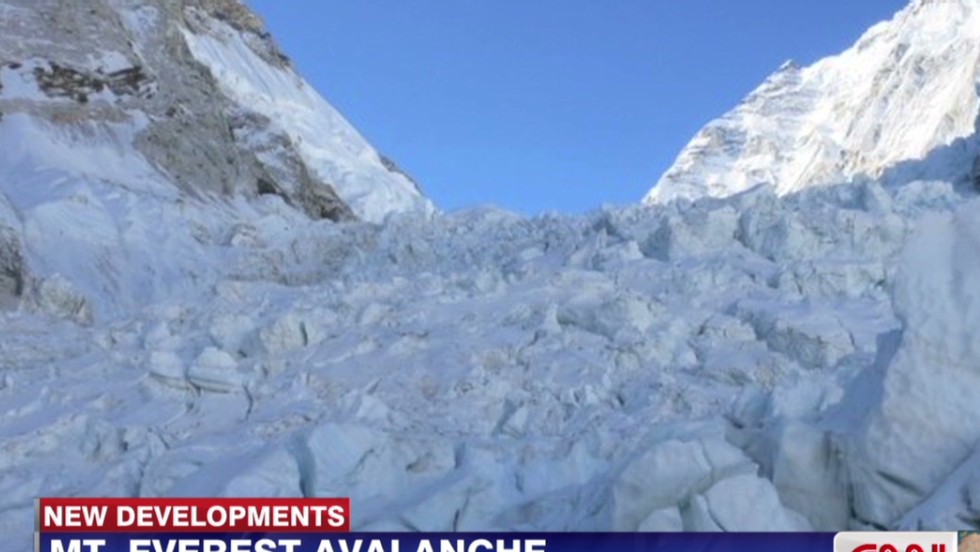
On this day in 2014 16 Nepali mountaineering guides most of them ethnic Sherpas are killed by an avalanche on Mt.Everest the Earths highest mountain.It was the single deadliest accident in the history of the Himalayan peak which rises more than 29000 feet above sea level and lies across the border between Nepal and China.The avalanche which occurred around 630 a.m.
swept over the Sherpas in a notoriously treacherous area of Everest known as the Khumbu Icefall at approximately 19000 feet.At the time the Sherpas had been hauling loads of gear for commercial expedition groups.The disaster in which no foreigners were killed reopened debates about the dangerous risks undertaken by Sherpas for their typically affluent clients (in addition to lugging most of the supplies for an expedition Sherpas are responsible for such tasks as setting lines of fixed ropes and ladders for climbers) as well as the over-commercialization of Everest where human traffic jams during the spring mountaineering season and massive amounts of litter have become common.In 1953 New Zealander Edmund Hillary and Sherpa Tenzing Norgay became the first people to officially reach the summit of Everest which the British named in 1865 for George Everest a Welsh-born surveyor general of India.
Andrew Waugh his successor as surveyor general chose the mountains moniker its unlikely George Everest ever saw the peak named in his honor.(Meanwhile the Nepalese refer to the mountain as Sagarmatha while Tibetans call it Chomolungma and the Chinese know it as Zhumulangma Feng.) Since Hillary and Norgays historic achievement more than 4000 people have scaled Everest while at least several hundred others have perished in the process.In 1996 eight climbers were caught in a storm on the mountain and died as chronicled in the best-selling book Into Thin Air by Jon Krakauer.
That season a total of 15 people lost their lives on Everest making it the deadliest season until 2014.In the aftermath of the April 18th tragedy a number of Sherpas boycotted the remainder of the climbing season out of respect for the 16 guides who were killed and also to protest such issues as the pay and treatment of Sherpas.As a result many commercial expedition companies opted to cancel their planned ascents.