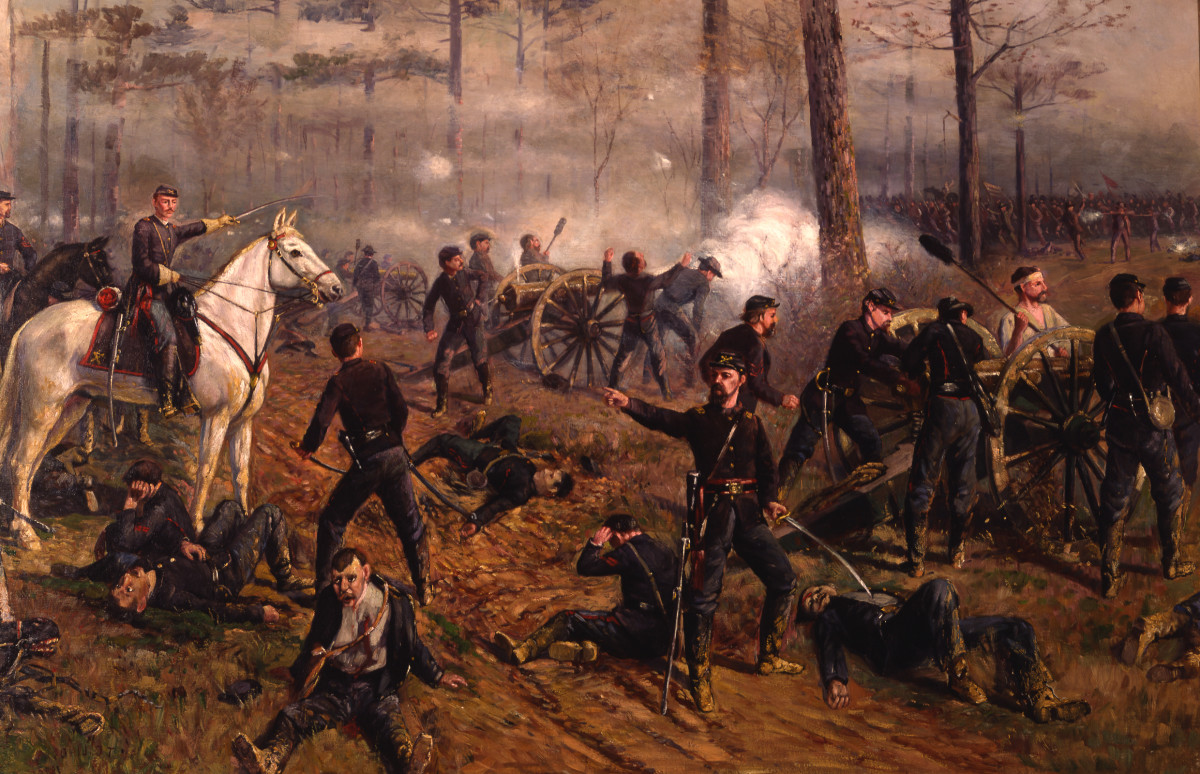
Battle of Shiloh concludes
Two days of heavy fighting conclude near Pittsburgh Landing in western Tennessee.The Battle of Shiloh became a Union victory after the Confederate attack stalled on April 6 and fresh Yankee troops drove the Confederates from the field on April 7.Shiloh began when Union General Ulysses S.Grant brought his army down the Tennessee River to Pittsburgh Landing in an effort to move on Corinth Mississippi 20 miles to the southwest.
Union occupation of Corinth a major rail center would allow the Yankees to control nearly all of western Tennessee.At Corinth Confederate General Albert Sidney Johnston did not wait for Grant to attack.He moved his army toward Grant striking on the morning of April 6.
Throughout the day the Confederates drove the Yankees back but could not break the Union lines before darkness halted the advance.Johnston was killed during the first day so General Pierre G.T.
Beauregard assumed command of the Confederate force.Now Grant was joined by the vanguard of Buells army.With an advantage in terms of troop numbers Grant counterattacked on April 7.The tired Confederates slowly retreated but they inflicted heavy casualties on the Yankees.
By nightfall the Union had driven the Confederates back to Shiloh Church recapturing grisly reminders of the previous days battle such as the Hornets Nest the Peach Orchard and Bloody Pond.The Confederates finally limped back to Corinth thus giving a major victory to Grant.The cost of the victory was high.Grants and Buells forces totaled about 62000 of which 1754 were killed 8408 were wounded and 2885 were captured or missing for a total of 13047 casualties.
Of 45000 Confederates engaged 1723 were killed 8012 wounded and 959 missing for a total of 10694 casualties.The 23741 casualties were five times the number at the First Battle of Bull Run in July 1861 and they were more than all of the wars major battles (Bull Run Wilsons Creek Fort Donelson and Pea Ridge) to that date combined.It was a sobering reminder to all in the Union and the Confederacy that the war would be long and costly.