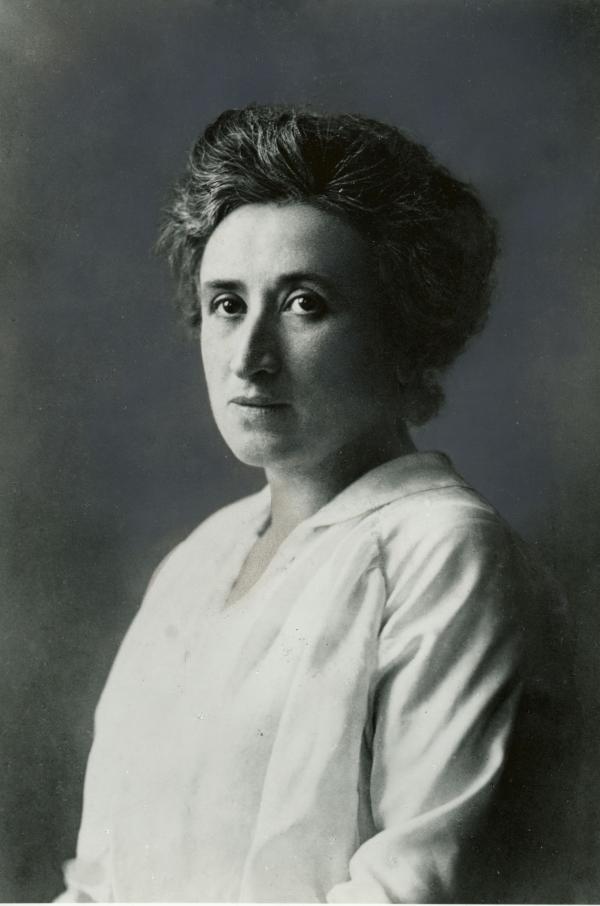
Socialist revolutionary Rosa Luxemburg born
Rosa Luxemburg the leader of a revolutionary faction of the German socialist party during World War I is born on this day in 1871 in Zamos Poland an area that at the time was under Russian control.The youngest of five children in a lower-middle-class Jewish family Luxemburg became interested in radical politics at a young age.In 1889 she left Poland and the repressive czarist regime of Alexander III (the predecessor to Czar Nicholas II) and went to Zurich Switzerland where she studied natural science and political economy.In 1898 Luxemburg married a German worker Gustav Lubeck thus attaining German citizenship.
She settled in Berlin where she affiliated herself with the German Social Democratic Party (known as the SPD) then the most prominent organization of international socialism in the world.In the years leading up to World War I Luxemburg became increasingly radical in her ideology advocating a general strike as the catalyst that would radicalize the workers and bring about an international socialist revolution.She and her fellow leftists in the SPD strongly opposed German participation in the war seeing it as an imperialist conflict that would not benefit the general population.This alienated them from the partys leadership which supported the war effort in the hopes that reform would follow a German victory.In December 1914 Luxemburg and the German socialist Karl Liebknecht formed a revolutionary faction of the SPD called the Spartacist League.
As its vociferous spokesperson Luxemburg published a treatise in 1916 The Crisis in German Social Democracy in which she claimed that social democracy had failed the German working class by its endorsement of an imperialist capitalist war effort.The only solution to this crisis Luxemburg believed was international class revolution.After a Spartacist demonstration in May 1916 against the war Luxemburg was again imprisoned she remained in jail for the remainder of World War I.Following her release in November 1918on the orders of the German chancellor Max von Baden to release all political prisonersLuxemburg helped begin the transformation of the Spartacists into the new Communist Party of Germany (KPD).The following January the Spartacists gathered in Berlin to launch a rebellion against the coalition government of von Baden and Friedrich Ebert the leader of the SPD.
Luxemburg joined them reluctantly urging her followers not to attempt a coup before they mustered sufficient popular support.She was unable to restrain them however and the rebels launched their attacks on January 10.Ebert subsequently called in the German army to subdue the rebellion.
In the conflict that ensued both Luxemburg and Liebknecht were captured and killed.Her body thrown into a canal was not retrieved until five months later.In death Luxemburg became a martyr to the cause of international socialist revolution.As her fellow Spartacist Clara Zetkin wrote of her In Rosa Luxemburg the socialist idea was a dominating and powerful passion of both mind and heart.She sacrificed herself to the cause not only in her death but daily and hourly in the work and the struggle of many years.
She was the sword the flame of revolution.