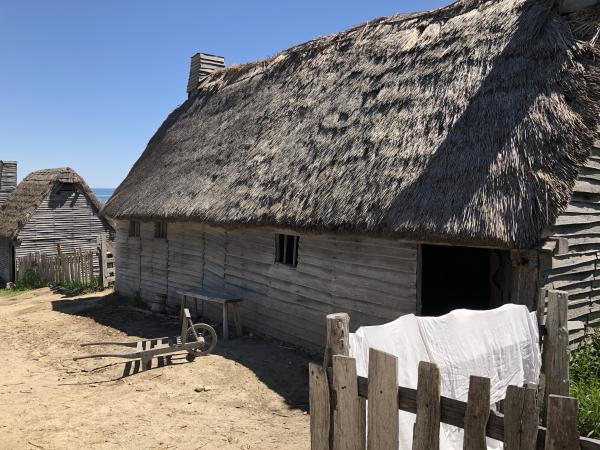
Construction of Plymouth settlement begins
One week after the Mayflower arrived at Plymouth harbor in present-day Massachusetts construction of the first permanent European settlement in New England begins.On September 16 the Mayflower departed Plymouth England bound for the New World with 102 passengers.The ship was headed for Virginia where the colonistshalf religious dissenters and half entrepreneurshad been authorized to settle by the British crown.In a difficult Atlantic crossing the 90-foot Mayflower encountered rough seas and storms and was blown more than 500 miles off course.Along the way the settlers formulated and signed the Mayflower Compact an agreement that bound the signatories into a civil body politic.
Because it established constitutional law and the rule of the majority the compact is regarded as an important precursor to American democracy.After a 66-day voyage the ship landed on November 21 at the tip of Cape Cod at what is now Provincetown Massachusetts.After coming to anchor in Provincetown harbor a party of armed men under the command of Captain Myles Standish was sent out to explore the area and find a location suitable for settlement.While they were gone Susanna White gave birth to a son Peregrine aboard the Mayflower.
He was the first English child born in New England.In mid-December the explorers went ashore at a location across Cape Cod Bay where they found cleared fields and plentiful running water and they named the site Plymouth.The expedition returned to Provincetown and on December 21 the Mayflower came to anchor in Plymouth harbor.
Two days later the pilgrims began work on dwellings that would shelter them through their difficult first winter in America.In the first year of settlement half the colonists died of disease.In 1621 the health and economic condition of the colonists improved and that autumn Governor William Bradford invited neighboring Indians to Plymouth to celebrate the bounty of that years harvest season.Plymouth soon secured treaties with most local Indian tribes and the economy steadily grew and more colonists were attracted to the settlement.
By the mid-1640s Plymouths population numbered 3000 people but by then the settlement had been overshadowed by the larger Massachusetts Bay Colony to the north settled by Puritans in 1629.The term Pilgrim was not used to describe the Plymouth colonists until the early 19th century and was derived from a manuscript in which Governor Bradford spoke of the saints who traveled to the New World as pilgrimes.In 1820 the orator Daniel Webster spoke of Pilgrim Fathers at a bicentennial celebration of Plymouths founding and thereafter the term entered common usage.