Eleven people killed in a stampede outside Who concert in Cincinnati, Ohio
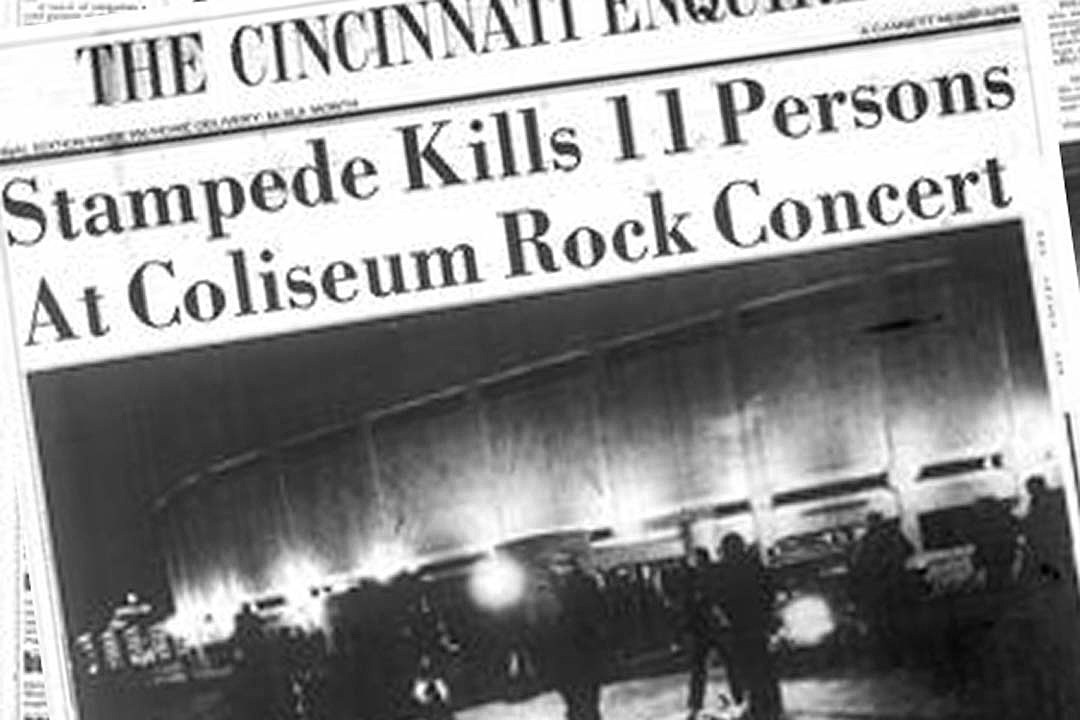
The general-admission ticketing policy for rock concerts at Cincinnatis Riverfront Coliseum in the 1970s was known as festival seating.That term and that ticketing policy would become infamous in the wake of one of the deadliest rock-concert incidents in history.Eleven people including three high-school students were killed on this day in 1979 when a crowd of general-admission ticket-holders to a Cincinnati Who concert surged forward in an attempt to enter Riverfront Coliseum and secure prime unreserved seats inside.
Festival seating had already been eliminated at many similar venues in the United States by 1979 yet the system remained in place at Riverfront Coliseum despite a dangerous incident at a Led Zeppelin show two years earlier.That day 60 would-be concertgoers were arrested and dozens more injured when the crowd outside the venue surged up against the Coliseums locked glass doors.In the early evening hours of December 3 1979 those same doors stood locked before a restless and growing crowd of Who fans.That evenings concert was scheduled to begin at 800 pm but ticket-holders had begun to gather outside the Coliseum shortly after noon and by 300 pm police had been called in to maintain order as the crowd swelled into the thousands.
By 700 pm an estimated 8000 ticket-holders were jostling for position in a plaza at the Coliseums west gate and the crowd began to press forward.When a police lieutenant on the scene tried to convince the shows promoters to open the locked glass doors at the west gate entrance he was told that there were not enough ticket-takers on duty inside and that union rules prevented them from recruiting ushers to perform that duty.At approximately 720 the crowd surged forward powerfully as one set of glass doors shattered and the others were thrown open.
With Coliseum security nowhere in sight the police on hand were aware almost immediately that the situation had the potential for disaster yet they were physically unable to slow the stream of people flowing through the plaza for at least the next 15 minutes.At approximately 745 pm they began to work their way into the crowd where they found the first of what would eventually turn out to be 11 concert-goers lying on the ground dead from asphyxiation.Afraid of how the crowd might react to a cancellation Cincinnati fire officials instructed the promoters to go on with the show and the members of the Who were not told what had happened until after completing their final encore hours later.In the aftermath of the tragedy the City of Cincinnati banned festival seating at its concert venues.
That ban was overturned however 24 years later and improved crowd-control procedures have thus far prevented a reoccurrence of any such incident.