The Bhopal-Union Carbide disaster
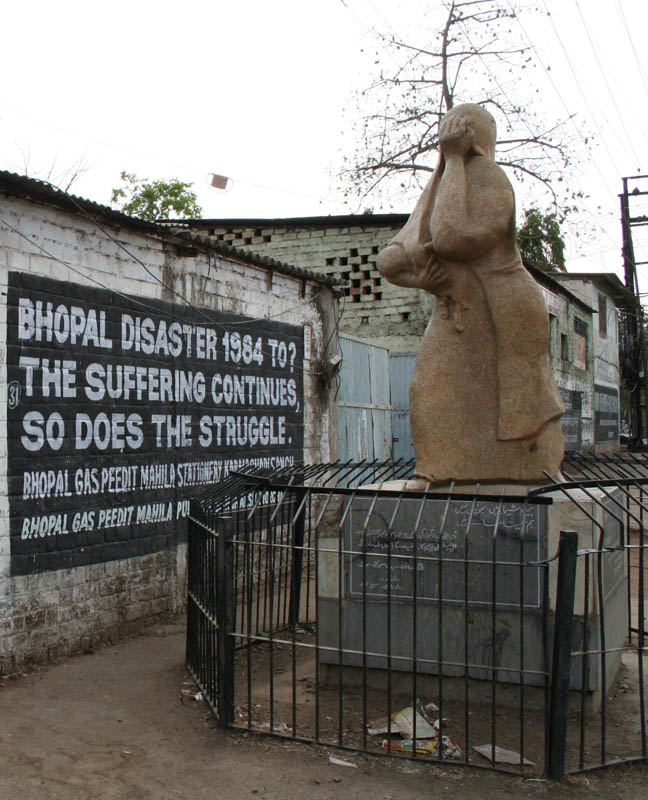
In the early morning hours one of the worst industrial disasters in history begins when a pesticide plant located in the densely populated region of Bhopal in central India leaks a highly toxic cloud of methyl isocyanate into the air.Of the estimated one million people living in Bhopal at the time 2000 were killed immediately at least 600000 were injured and at least 6000 have died since.The leak was caused by a series of mechanical and human errors in the pesticide producing plant operated by the Union Carbide Corporation a U.S.-based multinational.For a full hour the plants personnel and safety equipment failed to detect the massive leak and when an alarm was finally sounded most of the harm had already been done.
To make matters worse local health officials had not been educated on the toxicity of the chemicals used at the Union Carbide plant and therefore there were no emergency procedures in place to protect Bhopals citizens in the event of a chemical leak.If the victims had simply placed a wet towel over their face most would have escaped serious injury.The Indian government sued Union Carbide in a civil case and settled in 1989 for 470 million.Because of the great number of individuals affected by the disaster most Bhopal victims received just 550 which could not pay for the chronic lung ailments eye problems psychiatric disorders and other common illnesses they developed.
The average compensation for deaths resulting from the disaster was 1300.The Indian government famous for its corruption has yet to distribute roughly half of Union Carbides original settlement.Union Carbide which shut down its Bhopal plant after the disaster has failed to clean up the site completely and the rusty deserted complex continues to leak various poisonous substances into the water and soil of Bhopal.