Intifada begins on Gaza Strip
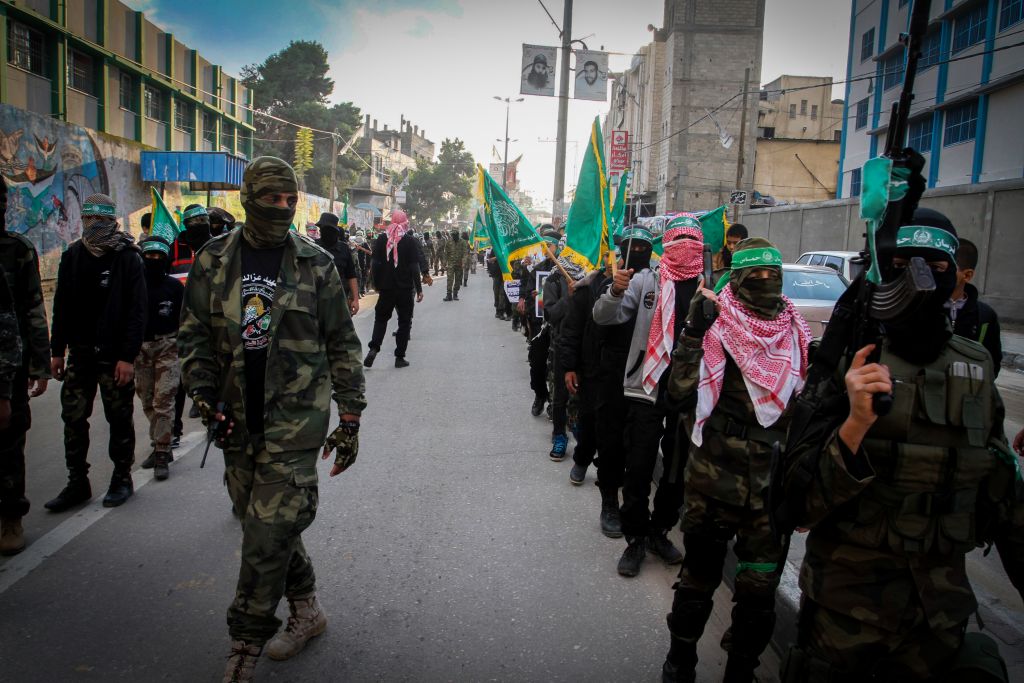
In the Israeli-occupied Gaza Strip the first riots of the Palestinian intifada or shaking off in Arabic begin one day after an Israeli truck crashed into a station wagon carrying Palestinian workers in the Jabalya refugee district of Gaza killing four and wounding 10.Gaza Palestinians saw the incident as a deliberate act of retaliation against the killing of a Jew in Gaza several days before and on December 9 they took to the streets in protest burning tires and throwing rocks and Molotov cocktails at Israeli police and troops.At Jabalya an Israeli army patrol car fired on Palestinian attackers killing a 17-year-old and wounding 16 others.
The next day crack Israeli paratroopers were sent into Gaza to quell the violence and riots spread to the Israeli-occupied West Bank.December 9 marked the formal beginning of the intifada but demonstrations small-scale riots and violence directed against Israelis had been steadily escalating for months.The year 1987 marked the 20-year anniversary of the Israeli conquest of the Gaza Strip and the West Bank the formerly Egyptian- and Jordanian-controlled lands that the Palestinians called home.After the Six Day War of 1967 Israel set up military administrations in the occupied territories and permanently annexed East Jerusalem in the West Bank.
With the support of the Israeli government Israeli settlers moved into the occupied territories seizing Arab land.By December 1987 2200 armed Jewish settlers occupied 40 percent of the Gaza Strip while 650000 impoverished Palestinians were crowded into the other 60 percent making the Palestinian portion of the tiny Gaza Strip one of the most densely populated areas on earth.In December 1987 despair by the Palestinians over their plight exploded in the intifada.The grassroots uprising soon came under the control of Palestinian leaders who formed the Unified National Command of the Uprising which had ties to the Palestine Liberation Organization (PLO).
Although images of young refugee-camp Palestinians throwing rocks at Israeli troops dominated television reports of the intifada the movement was widespread across Palestinian society.Affluent Palestinians and womens groups joined militant groups in strikes boycotts and other sophisticated tactics in their effort to win Palestinian self-rule.In July 1988 Jordans King Hussein renounced all administrative responsibility for the West Bank thereby strengthening the Palestinian influence there.In November 1988 the PLO voted to proclaim the establishment of an independent Palestinian state.
Meanwhile the intifada raged on and by its first anniversary more than 300 Palestinians had been killed more than 11000 had been wounded and many more were arrested.In the final weeks of 1988 PLO leader Yasser Arafat surprised the world by denouncing terrorism recognizing the State of Israels right to exist and authorizing the beginning of land-for-peace negotiations with Israel.In 1992 Labor Party leader Yitzhak Rabin became Israeli prime minister and vowed to move quickly on the peace process.He froze new Israeli settlements in the occupied territory and the intifada was called off after five years.In 1993 secret Israeli-Palestinian negotiations in Oslo Norway resulted in the signing of the historic Declaration of Principles on Interim Self-Government Arrangements in Washington D.C.
on September 13.The accord called for the withdrawal of Israeli troops from the Gaza Strip and the West Bank town of Jericho and the establishment of a Palestinian government that would eventually be granted authority over much of the West Bank.Despite attempts by extremists on both sides to sabotage the peace process with violence the Israelis completed their withdrawal from the Gaza Strip and Jericho in May 1994.In July Arafat entered Jericho amid much Palestinian jubilation and set up his governmentthe Palestinian Authority.
In 1994 Arafat Israeli Prime Minister Yitzhak Rabin and Israeli Foreign Minister Shimon Peres were jointly awarded the Nobel Peace Prize for their efforts at reconciliation.In 1995 Rabin was assassinated by a Jewish extremist at a peace rally in Tel Aviv and the Israeli-Palestinian peace process stalled under his successors Shimon Peres Benjamin Netanyahu and Ehud Barak.In September 2000 the worst violence since the end of the intifada erupted between Israelis and Palestinians after rightist Likud Party leader Ariel Sharon visited the Temple Mount a religious site in Jerusalem of great importance to both Jews and Muslims the latter of whom control it.Seeking a strong leader to suppress the bloodshed Israelis elected Sharon prime minister in February 2001.
After suffering a stroke he was replaced by his deputy Ehud Olmert in April 2006.A permanent cease-fire and return to the peace process remain elusive.